
Construction Cost Breakdown: How-to Guide with Example & Template
Concept about the construction cost breakdown sheet
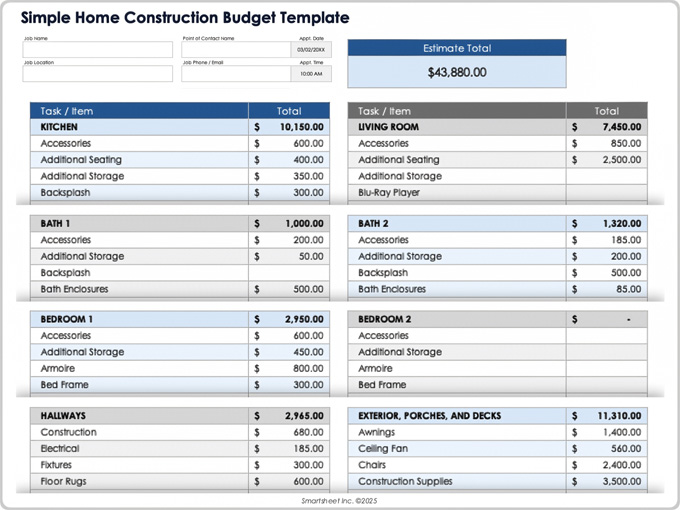
A construction cost breakdown sheet helps to organise all expenses in the construction project into defined categories. The construction cost breakdown sheet helps to provide a clear view of the contribution of each cost to the total construction budget. Thus, the construction cost breakdown sheet helps to prevent hidden or unexpected expenses in the construction project.
The construction cost breakdown sheet has been used by the project managers to track, control, and forecast spending throughout each and every stage of the building construction project. With the help of the construction cost breakdown sheet, the project team members can track real-time costs, monitor construction performance, and compare the actual versus planned costs to generate accurate reports.
Learn about the key components of a construction cost breakdown sheet
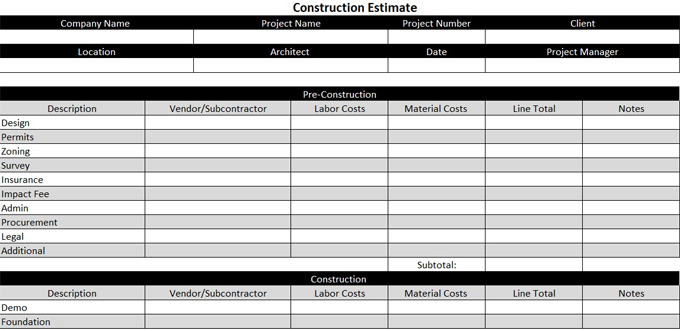
The construction cost breakdown sheet has several key components, which help to represent the different parts of the overall cost structure. These components are as follows:
Labour cost
The labour cost indicates the wages and benefits that have been paid to the workers on the construction site. In this context, the number of labourers and the type of work depend upon the complexity of the construction project. The expected working hours for each labourer should be accounted for to estimate the labour cost.
Equipment cost
The equipment cost refers to the purchase or rental cost for machinery used on the construction site. The equipment cost also includes the maintenance, operation and transportation cost of the equipment.
Material cost
The material cost helps to represent the raw materials that have been required for the construction project. The cost of the construction material can fluctuate on the basis of supply and demand. The builders should stay updated on the current prices of the materials.
Subcontractor cost
Most of the construction project relies on the subcontractor to perform specialised tasks. These subcontractor fees are another essential part of the overall estimate.
Permits and fees
Necessary permits should be obtained from the local authorities before beginning the construction process. This permit cost can vary depending on the location of the project and the type.
Overhead costs
The overhead costs of the construction project refer to the indirect costs, including the project management fees, office supplies, and insurance.
Contingency
The contingency fund is 5-10% of the total estimated cost, which has been set aside for the unexpected costs. This contingency fund is essential to deal with unforeseen issues at the construction site.
Profit margin
The profit margin of the construction project typically ranges between 5% and 20%, which helps to ensure that the contractor can cover the project risks and make a reasonable profit.
What are the key features that are responsible for preparing the construction cost breakdown sheet?
The project manager is responsible for creating the construction cost breakdown sheet and ensuring the final construction budget. This construction cost breakdown sheet includes all the expected costs and contingencies and helps to maintain accountability and accuracy throughout the entire construction project.
Project tasks
The project task is one of the key factors that influences the generation of the construction cost breakdown sheet. The project tasks have been associated with all major tasks of the construction project, and help to break down these tasks into manageable components. Each project task includes the estimated materials, labour and equipment costs. The breakdown of the project tasks helps to ensure that the project team members will understand the financial expectations tied to each activity of the project.
Project deliverables
The project deliverables help to define the tangible outcomes of each phase of the project. The project deliverables help the project stakeholders and clients to understand how the project resources have been distributed along the project milestones, and thus support transparency in the financial reporting.
Profit margin
The profit margin helps to represent the financial return that is expected after covering all the project costs. Regularly reviewing the profit margin helps to prevent the erosion of the profit due to scope changes or overrun.
Contingency reserve and management reserve
The contingency reserve and management reserve help to cover the unforeseen issues in the construction project, for example, design errors, weather delays or scope changes. The addition of the contingency reserve and management reserve in the construction cost breakdown helps to ensure financial flexibility and risk preparedness, thus enabling the project team members to stay responsive when challenges arise.
To learn more, watch the following video tutorial.
Video Source: Cost Engineering Professional
Download Construction Cost Breakdown Sheet
Logistics
The logistics cost helps to cover the cost of transportation, the cost of delivery and the storage of materials. The addition of the logistics cost in the construction cost breakdown helps to prevent schedule delays caused by poor inventory management or supply chain bottlenecks.