
Compressive and Tensile Strength of Concrete
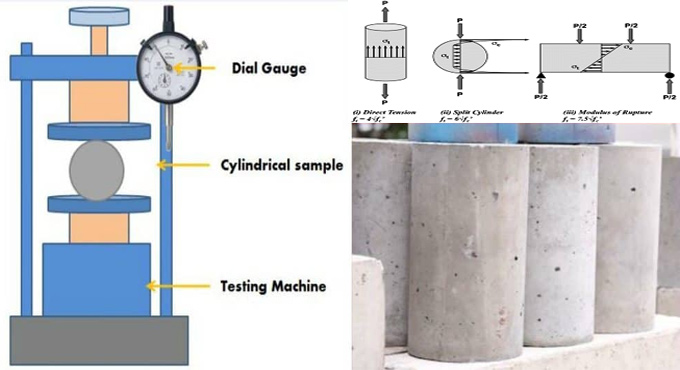
The tensile strength of the concrete is the maximum load which can be held by the material without breaking while it is stretched. The determination of the tensile strength of the concrete is crucial to know if there is any possibility of damage to the concrete due to the stretch. The breaking and cracking in the concrete arise when the tensile forces of the concrete surpass the tensile strength of the concrete. The tensile strength of the concrete should range between 10% and 12 % of its binding strength.
The tensile strength of the concrete helps to achieve the best-desired value of the concrete. The tensile strength of the concrete plays a fairly large part in contributing to the design procedure. In the case of the tensile strength of the concrete not being estimated properly, the overall construction project can also be affected. This may lead to accidents in the construction project. In the crack control procedure, the tensile strength of the concrete has been acting as the most dominant factor, thus helping to avoid cracks in the construction structure.
Factors that influence the tensile strength of concrete
There are numerous factors that impact the tensile strength of the concrete, which are:
➢ The curing process of the concrete impacts the concrete’s tensile strength.
➢ The material’s quality that has been used in the concrete manufacturing procedure also influences the concrete’s tensile strength.
➢ The aggregate water-cement ratio impacts the tensile strength of the concrete.
➢ Temperature and humidity also influence the tensile strength of the concrete.
➢ The coarse-to-fine aggregate ratio, admixtures and the fineness of the cement also affect the concrete’s tensile strength.
Test methods for the concrete’s tensile strength
There are three types of test methods that have been used for determining the tensile strength of the concrete, which are:
Uniaxial Tensile Test
This test is the direct tension test which helps to determine the tensile strength. In this type of test, the concrete specimen has been held at the ends and pulled apart which includes uniaxial tensile stress.
Split Cylinder Test
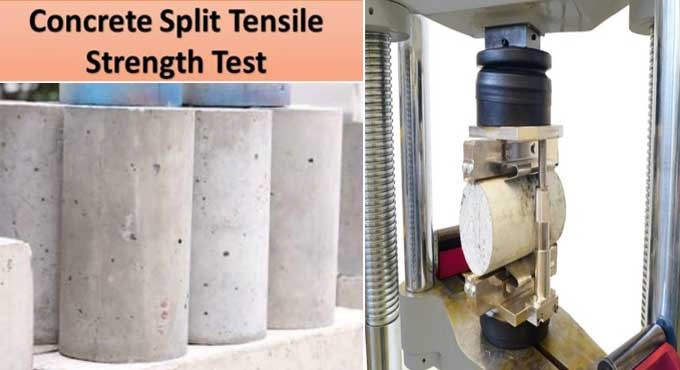
A concrete cylinder has been used to perform this test. In this context, the concrete cylinder has been placed horizontally among the loading surfaces, and the load has been placed forward of its diameter.
Flexural Strength Test
The flexural strength of the concrete refers to the concrete beam or slab’s ability to resist failure in bending.
Discussion on the Split tensile strength test on concrete
The split tensile strength test of the concrete is one of the crucial mechanical tests that has been designed to evaluate the tensile strength of the concrete. The split tensile strength test of the concrete helps to focus on the resistance of the materials to tensile forces. The split tensile strength test includes the application of diametrically opposed forces to a cylindrical concrete specimen until it fractures. This helps to allow the engineers to estimate the tensile strength of the concrete, which is the critical parameter to assess the durability and structural integrity of the concrete in different construction projects. The results of the split tensile strength test help to provide valuable insight into the ability of the material to withstand tension, as well as helps to contribute to understanding the mechanical behaviour of the concrete.
Equipment used for the split tensile strength test on concrete
There are numerous equipment that have been used in the split tensile strength test of the concrete, which are:
Testing Machine
The testing machine has the ability to apply loads without any shock. This testing machine has the ability to apply loads at a consistent rate within the range of 0.7 to 1.4 MPa/min to split the tensile strength until the specimen failure occurs.
Bearing Strips
The bearing strips are positioned among the specimens, which are 3.2 mm thick, 25 mm wide. The size of the bearing strips must be equal to or slightly longer than the length of the specimen.
Tamping Rod
The tamping rod has been used to compact the concrete specimen. The diameter of the tamping rod should be 16 mm, and the length should be 600 mm.
Concrete specimen Moulds
The concrete specimen moulds have been made of 3 mm-thick steel, which should open longitudinally for the easy removal of the specimen. This concrete specimen mould has the mechanism of remaining closed during use.
Supplementary Bearing Bar or Plate
These supplementary bearing bars have been used while the largest dimension of the upper bearing face, or the lower bearing block, is smaller than the cylinder’s length needs to be calculated.
The procedure of the split tensile strength test
There are several tests included in the split tensile strength test, which are as follows:
➢ This test starts by retrieving the wet specimen after 7 and 28 days of the curing procedure.
➢ After starting the test, wipe off water from the surface of the specimen.
➢ fter that, diametrical lines have been drawn on both ends of the specimen, which helps to ensure that they are on the same axial plane.
➢ In the next step, the weight and dimensions of the specimen have been recorded.
➢ In the next step, the compression testing machine has been set to the required range.
➢ After that, a plywood strip has been placed on the lower plate and positioned around the specimen.
➢ The specimen has been aligned, as a result, the marked lines on the end are vertical and centred over the bottom plate.
➢ Another plywood strip has been positioned above the specimen.
To learn more, watch the following video tutorial.
Video Source: Civil Engineering
➢ The upper plate has lowered until it touches the plywood strip.
➢ A continuous load has been applied without shock at a rate within the range of 0.7 to 1.4 MPa/min.
➢ After that, the breaking load has been recorded.