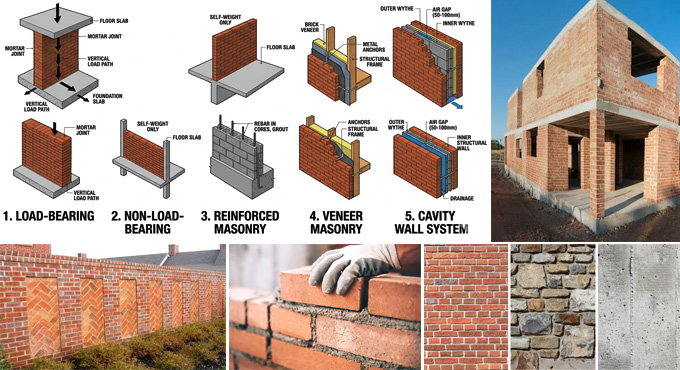

Detailed understanding of the different types of Masonry Walls used in the Construction Industry
A masonry wall is a type of wall that has been created by using brick and mortar. Other materials that have been used to construct masonry walls include adobe, tile, stone, ceramic blocks and glass blocks. Masonry walls are long-term durable, and they can be built in any size and shape as per the construction requirements.
Discuss the applications of masonry walls in construction projects
Used as structural support
Masonry walls have been used as load-bearing walls in the building structure, which helps to support the weight of the building structure above. The masonry walls are also used as the foundation wall in the building structure to bear the load of the entire building structure.
Used in external and facade walls
The masonry walls have been commonly used in the external walls of the building because of its aesthectic appearance, strength and resistance to the weather conditions. The masonry walls help to offer excellent protection against the rain, wind and snow.
Used for fire protection
The masonry walls are resistant to fire, which makes them ideal for the construction of firewalls in commercial and residential building structures. The masonry walls help to prevent the spread of fire from one section of the building to another section.
Energy efficiency feature
The masonry walls help to provide natural insulation to the construction structure. The masonry wall can also absorb and store heat during the daytime and release it at night time, thus helping to regulate the indoor temperature of the building structure.
Used for retaining walls
The masonry wall is used in the retaining wall construction process to hold back the soil, prevent erosion, and also help to maintain the integrity of the sloped land.
Used in interior walls
Masonry walls are also used in interior walls to divide the spaces within the building structure. Masonry walls are also used in basements, which helps to offer high resistance to moisture; thus, it helps to provide a strong barrier against water seepage.
Used in heritage buildings
Several heritage buildings have been made with masonry walls, which helps to maintain the authenticity of that building structure.
Seismic resistance feature
The masonry walls help to provide stability during any kind of seismic events in the building structure.
Act as security walls
The masonry walls have been used to construct secure perimeter fences around the properties in the industrial, commercial or secure residential areas.
Learn about the different types of masonry walls
Load-bearing masonry wall
This type of masonry wall has been used to resist a load resting upon it. Load-bearing masonry walls have been used in large building structures, such as tall buildings or housing construction works. The load-bearing masonry walls have been constructed with brick, stone or concrete blocks. Load-bearing masonry walls have been used to transfer the weight from the roof to the foundation. The load-bearing masonry walls can be exterior or interior, and it is flexible to construct.
Hollow or Cavity masonry wall
This type of masonry wall is made with cement blocks. Hollow or cavity masonry walls have been used to stop dampness from getting inside the building structure. These masonry walls help to create a hollow area between the inside and outside of the masonry walls. These masonry walls also help with climate control.
Reinforced masonry wall
This type of masonry wall has been constructed with any type of concrete, brick or other materials that strengthened the use of the other building materials. Reinforced masonry walls have been used to resist the weight of the connecting walls and floors in the building structure.
Composite masonry wall
This type of masonry wall has been made with the combination of two or more building materials, such as bricks, stones or hollow bricks. The composite masonry wall has been used to improve the appearance of the building structure by covering up the inferior works.
Post-tensioned masonry wall
This type of masonry wall helps to provide additional axial load to the overall masonry structure, which helps to improve the resistance to lateral force. Post-tensioned masonry walls have been used in bridge structures, residential foundations, columns and walls.
Understand the benefits of masonry walls used in construction projects
1. Masonry walls are cost-effective structures, which help to eliminate the requirement for formwork and the associated labour costs.
2. Masonry walls are long-term durable, and they require little maintenance.
3. The masonry walls also help to make the building structure energy efficient.
4. The contractor can incorporate a concrete structure into the masonry wall, which helps to keep the interior structure protected from heat and cold environments.